
Look who’s back. Back again. Curtis is back. Tell a friend. Or don’t. I don’t make money off ads, so I don’t care how many people read this. So why am I doing this? Mostly for posterity’s sake. I’ve realized that I like having a journal of all the things I did here that I’ve at least partly forgotten by now. And partly because I’m not good at remembering to post on social media, so this way all five of you who want to know what I’ve been up to can follow along. Also, the big trend these days is doing reboots of old franchises that no one asked for, so I figured I’d get in on that. Now you’re wondering, “If you can’t even remember (and don’t have time) to post occasional things on Instagram, how can you expect to remember to do this?” Great question. I’m not sure. But this is easier to do at work during my free time.
Now, I’m sure you noticed the super ultra secret password when you first clicked on the link. The last site ended up with a little bot problem (that’s not why I switched the web address, I switched because KaatisSensei.pizza is an amazing domain name), so I’m adding some security measures. Also for the sake of privacy, I’ll just be using my kids’ initials, J and C (yes, after Jesus Christ). I’m sure my mom has repeated their names for you a few times now, but let’s do a quick Japanese lesson to help.
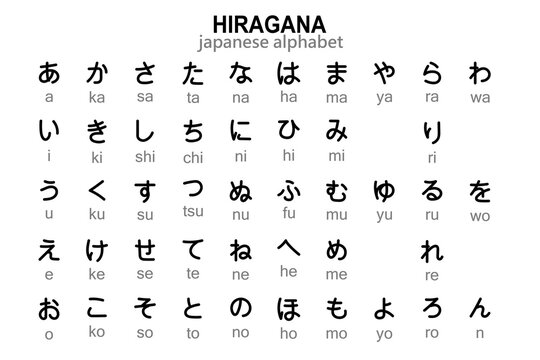
Japanese uses a syllabary instead of an alphabet. What that means is that each “letter” consists of just a vowel “a i u e o” or a consonant followed by one of those vowels (e.g. ka ki ku ke ko). The great thing is that these vowels are ALWAYS pronounced the same.
- ‘A’ is “ah” like the Count says in threes.
- ‘E’ is “ay” like in Pokémon or Beyoncé.
- ‘I’ is “ee” like in “pizza” or “spaghetti.”
- ‘O’ is “oh” like Sandra.
‘V’ is very very extraordinary.Not a vowel, also not a sound in Japanese.- ‘U’ is “oo” like a scary ghost.
Basically, they’re the same vowel pronunciations as Italian. Always. No exceptions. Alright, some slight exceptions where the vowel is not fully pronounced. Particularly ‘u’s that come after an ‘s.’ Hence why the ‘u’ in J’s name is not pronounced.
This is where “Kaatis(u) Sensei” comes from. The r’s in Japanese are like Spanish rolled r’s, not like American ones. So anything that has an “er” sound just becomes “ah”/”aa” in Japanese. The “ti” is pronounced “tea” and is a special sound only used for foreign words. (In normal Japanese, “ti” becomes “chi” (the “t_” letters are a mess in Japanese)). Last is “su” because a Japanese word can’t end in a consonant (except ‘n’). But the ‘u’ often isn’t pronounced between the two ‘s’s, so I don’t write it. Confused? Just wait till you learn kanji. For now, just remember the vowel pronunciations and you’ll be good.
Alright, that covers the basics. So, on to the blog. The most common questions that I’m not asked, but my mom probably is are “How’s Curtis? What’s he up to?” My answers are “Tired,” and “Not much,” though I’m sure hers are a little more detailed. But that’s why we’re here – to expand upon those answers. I currently live in Nagoya, which is the 4th most populous city in Japan, but it doesn’t have as much cool stuff, so no one really knows it. Just find a map of Japan and point to the very middle. Now like an inch down and to the left. Yeah, around there. Next year, I’ll have been here for a decade, which means it’ll be time to move back to America soon. Did I think I would be here this long? Nope. But also I don’t really plan for things more than like a year away. Too many unknowns.
We have two kids, which I think is the best number for your sanity other than zero. J is four and C is almost two. I love them very much, but I miss sleeping later than 6a.m. At least the whole “have two kids so they can distract each other” plan has finally started to work (mostly). They’re usually great at playing well together, but it can devolve into a fight at any time (C is always the first to throw hands). J has inherited both my sense of humor and my inability to know when a joke should end. C is just getting to 3-word sentences. Mostly demands that must be met immediately if we value our lives. Though the only 3-word sentence I’ve heard so far is [“C likes Spider-Man.”] (I use brackets to indicate a translation since she said it in Japanese.) So proud of her.
Now that J is four so we finally have the same interests. Lego, superheroes, Pokémon, potty humor, etc. For Maki’s sake, I try not to encourage the poop jokes, but sometimes they’re really funny. My favorite recent one is his song, “The poop on the bus goes [straining noises in rhythm] all through the townnnnn.” They also both take after me in that he is initially very shy, but then goes crazy once he’s gotten used to the people. I think most of my parent teacher conferences as a kid included the phrase “come out of his shell” (and a few maybe wishing I’d go back in).
Both of them understand both English and Japanese, though C mostly just speaks Japanese for now (except “no”). The problem with having kids that are bilingual, is it increases the difficulty of “what is this child trying to say?” Is it English? Is it Japanese? Is it a word they just made up? Who knows. I will mostly speak English to them, while Maki (and everyone at their school) will speak Japanese to them. So the English they do know is mostly midwest early 2000’s teen peppered with some Roaring 20’s slang they get from Mickey. It’s weird being someone’s main exposure to English. I could start saying “That’s so fetch,” and they’d just assume that it’s a normal thing (which it totally is). Both at home and as a teacher, I struggle with how clearly I should pronounce things. Do I say the ‘t’ in “mountain”? “Did you” or “Didju?” Usually it’s a little of both. You want the kids to know exactly hat the word is, but also prepare them to listen for how it’s actually pronounced. Sometimes I’ll slide the vowels a little closer to their Japanese pronunciation to make it easier for them to understand (or in the case of “six,” slide the i up so that it’s definitely not a short e).
So obviously I’m still teaching English. In nine years, I’ve worked at four different companies in three prefectures, taught at like 20 schools, and taken three pay cuts (because if anyone is more valued than teachers, it’s foreign teachers). Currently I’m at one JHS (7th-9th grade) with almost 1,000 kids (8-9 classes per grade). People often ask if I’m gonna keep teaching when we move back, and the answer is [insert your choice of expletive] no. I like teaching, but I do not have the patience nor the stamina to teach an actual class all day every day. Have you met kids? They’re crazy. And their parents can be crazier. Not to mention how little they’re paid. Nope, I’m gonna go back to doing computer stuff.
Maki’s good. I think that’s about as much as I’m allowed to divulge. Not because anything happened, just because Japanese people value their privacy. Her current company has a branch (in America) across the street from a Burger King I frequented whenever I visited my cousins, so her job security is much less questionable than mine will be when we move.
I think that covers the basics. All the basic information with only a few tangents. The next post will be about Christmas and New Years stuff.
Did I eat KFC on Christmas? How many diseases did we catch over break? Am I really still doing this old bit? Find out on the next episode of the Gaijin Chronicles! Dah dahh dadahhh da dahh duuhhh. (I honestly don’t remember if I ever had a real song in my head when I first wrote that).
Discover more from The Gaijin Chronicles Returns
Subscribe to get the latest posts sent to your email.